


I serve as Chief AI Officer at NOW CFO, one of the largest fractional CFO networks in the United States. Not as an outside advisor giving presentations, but inside the business, accountable for what gets built, what gets adopted, and what actually helps teams do better work.
That vantage point has made one thing clear. AI can give fractional CFO firms a real structural advantage, but only if they use it in the right places and in the right order.
This is the version of that conversation I wish I could have given our team earlier.
Why the Fractional CFO Model Is Well Suited for AI
The fractional CFO model has a built-in constraint: time.
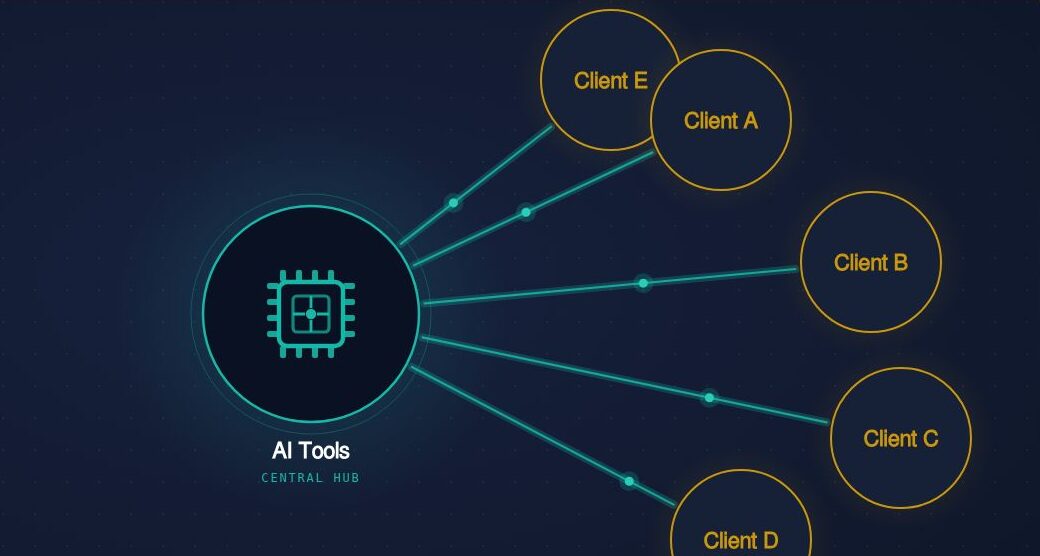
A fractional CFO serves multiple clients at once. The number of clients they can handle, the depth of service they can provide, and the economics of the firm all come back to one thing, how much quality time they can spend inside each client account.
That is why AI matters here.
Used well, AI is not just another software layer. It is a capacity multiplier. It reduces mechanical work, speeds up analysis, shortens reporting cycles, and helps surface issues earlier. That creates room for more judgment, better conversations, and more value per client.
According to Protiviti’s 2025 finance trends research, AI adoption among finance leaders jumped from 34% in 2024 to 72% in 2025. The most common use cases included process automation, forecasting, and risk assessment. Those are all areas where fractional CFO firms spend real time and where better leverage matters.
The market itself is growing too. According to Fortune, the global virtual CFO market is projected to grow from roughly $4.7 billion in 2026 to more than $10 billion by 2035. The firms that capture the most value from that growth will be the ones that build AI into the delivery model early.
What AI Actually Changes for a Fractional CFO
The conversation gets more useful when you move past theory and look at what changes in practice.
Financial analysis gets faster
What used to take hours often takes minutes.
A financial review used to mean pulling reports from multiple systems, finding patterns manually, building the story, and then turning that into something client-ready. Today, AI can help with the pattern detection, narrative draft, and first-pass analysis. The CFO still reviews, interprets, and decides. But the mechanical work drops fast.
That matters when you are serving multiple clients at once. Less time assembling the picture means more time discussing what the picture means.
Compliance issues get flagged earlier
AI is good at reviewing large volumes of data with consistency. That makes it useful for compliance scanning, anomaly detection, and spotting errors before they become more expensive problems.
One managing partner using ValiSights caught a misreporting issue that would have turned into roughly $23,000 in auditor expense if it had gone unnoticed. That is the kind of issue that can hide in plain sight when humans are stretched thin.
Benchmarking becomes more practical
Clients do not just want numbers. They want context.
How does gross margin compare to peers. Are payment cycles out of line. Is cash burn reasonable for this stage of the business. These are high-value advisory questions, but historically they were harder to answer consistently without expensive datasets or a lot of manual work.
AI-powered benchmarking makes this easier to operationalize, which means more firms can offer it as a standard part of the engagement instead of treating it like a premium extra.
Month-end close becomes less painful
Month-end close can dominate the schedule of any fractional CFO managing several clients at once.
When AI shortens the close process, it changes the whole rhythm of the month. One finance team documented reducing a month-end workflow from 20 hours to 2 hours. For a firm handling multiple clients, that kind of compression is not incremental. It changes capacity.

Where Fractional CFO Firms Get AI Wrong
Most AI mistakes in this space are not technical. They are sequencing mistakes. Many of these same patterns are showing up more broadly across finance leadership. We covered that in more depth in our post on how AI is changing the CFO role.
1. Rolling tools out too broadly too early
Not every client has the same systems, data quality, or compliance requirements. A tool that works well in one environment may break down in another.
Start client by client. Validate in live conditions. Standardize only after you know what is actually worth standardizing.
2. Treating AI output like a finished deliverable
AI can draft analysis. It can flag anomalies. It can speed up narrative creation. It should not be treated as final without review.
Fractional CFOs are still accountable for what goes out under their name. The role of AI is to accelerate the work, not replace professional judgment.
3. Underestimating the integration work
This is one of the least glamorous parts of AI adoption, and one of the most important.
If ERP, AR, AP, payroll, and banking data are disconnected, the AI layer will be incomplete too. Good outputs depend on connected systems and usable data. Firms that skip this part usually blame the tool when the real issue is the foundation.
4. Leaving AI out of onboarding
The firms getting the most out of AI do not treat it like a special add-on. They build it into the client onboarding process.
They assess data readiness early. They map integrations early. They identify the highest-value automation opportunities early. That makes AI part of how they serve the client, not a side experiment.
If you want a more tactical look at finance use cases, our guide to AI for accounting teams goes deeper on where AI can help and where review still matters.
A Practical Way to Adopt AI in a Fractional CFO Firm
The best results usually come from a simple sequence.
Start with one client. Pick one with relatively clean data and a clear use case. Do not begin with the messiest environment or the hardest internal sell.
Then identify the two or three activities that consume the most time and are easiest to improve. Monthly reporting. Compliance scanning. Forecasting. AP workflows. Start there.
Build a review process around the AI output. Make clear where automation stops and professional review begins.
Once it works, document the process. That becomes the starting playbook for the next client.
Then move that thinking upstream into onboarding. Data readiness, integration mapping, and AI configuration should become part of how the firm launches client work, not something bolted on later.
That is where AI starts to become a delivery advantage instead of just a tool experiment.
What Matters Most Right Now
The biggest mistake fractional CFO firms can make is treating AI like a future capability.
It is already changing the economics of the model.
The firms that use it well will serve more clients, move faster, catch more issues earlier, and create more room for real advisory work. The firms that wait will eventually find themselves competing against practices that can deliver more, with better speed and lower cost.
That does not mean buying every AI tool that shows up in your inbox.
It means being disciplined. Start where the time goes. Start where the data is usable. Start where the value is easy to see.
That is usually enough to show whether AI is going to be a real advantage for the practice.
About the Author
Jason Wells is the founder of AI Dev Lab and serves as Chief AI Officer at NOW CFO, one of the country’s largest fractional CFO networks.